An inspection exists to establish which of five problems you have, because four of them are cheaper to fix than the one everybody assumes.
Talk it throughRising Damp Perth assesses and treats damp across the Perth metropolitan area.
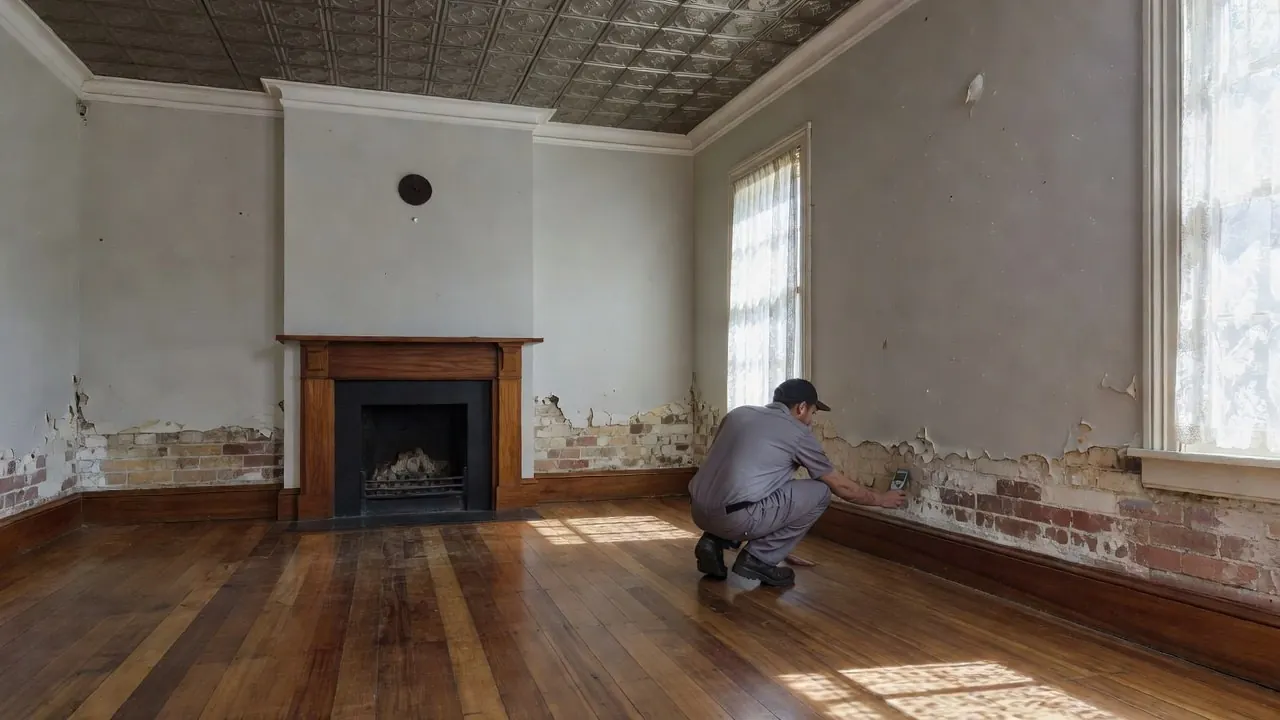
Moisture readings are taken at intervals up the wall, not at one spot. Rising damp produces a curve — wet low, drying with height — and that curve is what separates it from a leak, which is wettest at the source and gets drier in every direction from there.
Outside, the assessment looks at ground levels against the wall, paving and garden beds, the reticulation layout, and any render or paint already applied. In Perth the external check can settle it before the internal readings do.
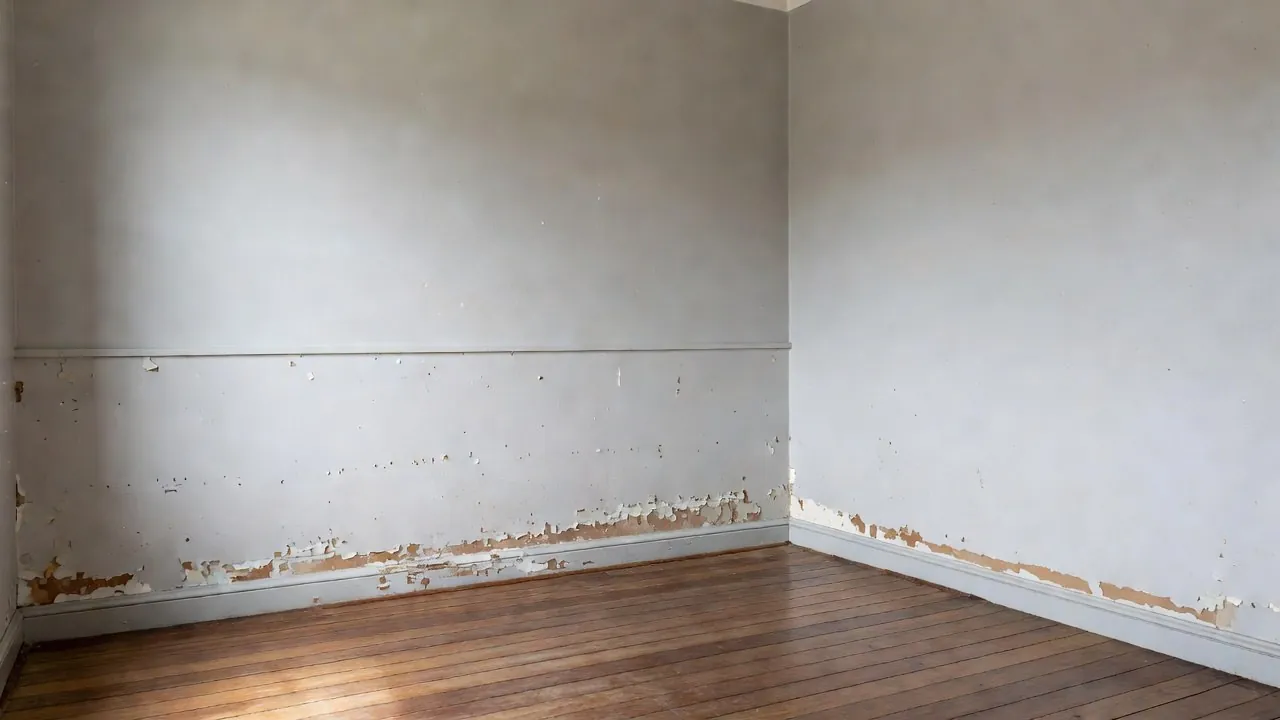
An even horizontal line, roughly 600mm to 1.2m above the floor, on a ground-floor wall. It marks where the water stops climbing and starts evaporating. Condensation does not produce a level line like this.
Salts left behind as the water evaporates. On limestone it often looks like a fine bloom; on brick it can be gritty. Brushing it off works until the next winter.
Usually a sign of a non-breathable coating applied over a wall that needs to dry outward. The coating is not failing — it is doing its job and trapping the moisture behind it.
Salt crystallisation forcing the surface apart. It is usually well advanced before anyone calls it damp.
Bore water. Perth's reticulation draws iron-rich groundwater, and where it hits a wall the iron stains it. It is not rising damp, it is cosmetic, and it is worth knowing before you pay to treat the wrong thing.
A smell that comes back each winter points to a seasonal source, such as ground water or condensation, rather than a leak that runs all year.
A written finding naming the cause, the extent, and what the treatment sequence would be — usable as a second opinion, or to negotiate on a purchase.
| Work | Indicative range | What it covers |
|---|---|---|
| On-site assessment and written diagnosis | $450 plus GST | Moisture readings across the affected walls, a look at ground levels and drainage, and a written finding on which of the five common causes you actually have. |
Every range, and how the figures were set, is on the cost page. A fixed price follows the assessment.
We carry out assessments across the Perth metropolitan area, including:
 Rising Damp Perth