Rising Damp Perth connects owners of Perth's older limestone and double-brick homes with independent damp specialists. We diagnose what is actually happening to the wall before anyone quotes to fix it.
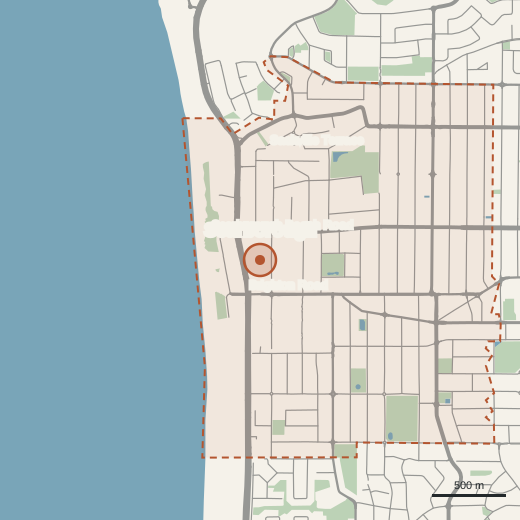
Talk it throughRising Damp Perth arranges damp assessments across Perth metropolitan area. This page is about rising damp in Scarborough, WA.
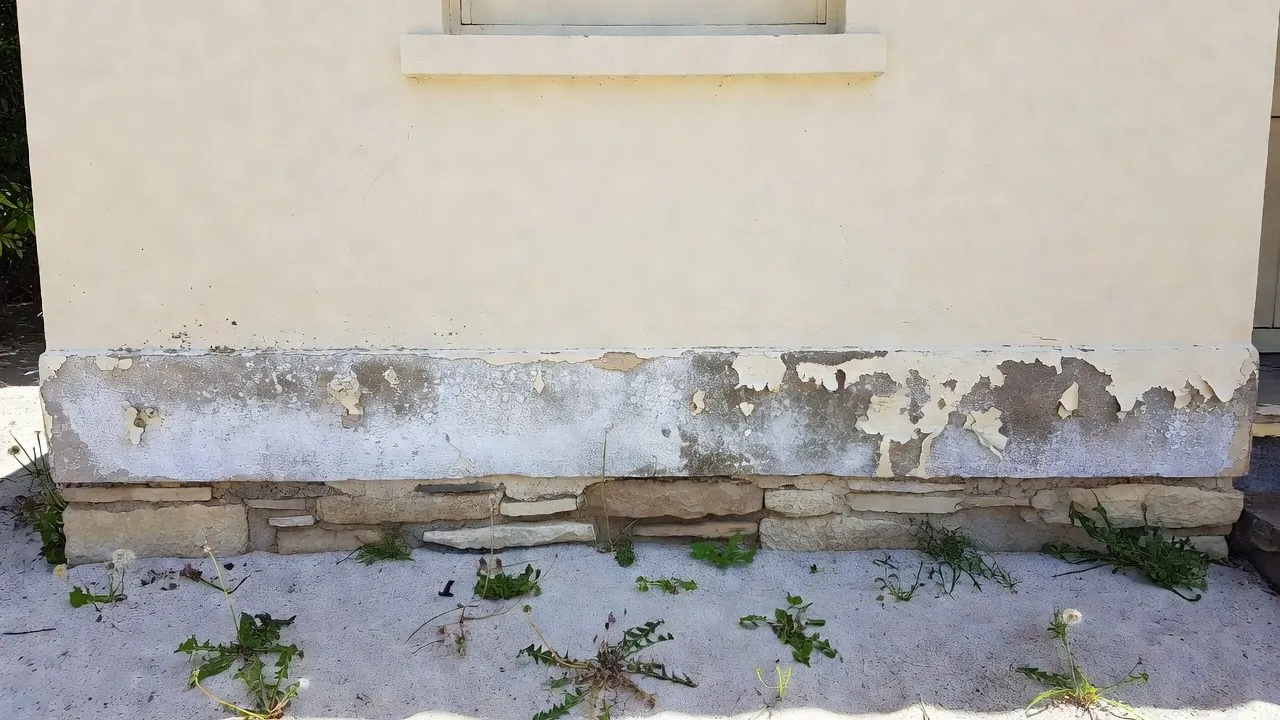
An even horizontal line, roughly 600mm to 1.2m above the floor, on a ground-floor wall. It marks where the water stops climbing and starts evaporating. Condensation does not produce a level line like this.
Salts left behind as the water evaporates. On limestone it often looks like a fine bloom; on brick it can be gritty. Brushing it off works until the next winter.
Almost always a non-breathable coating applied over a wall that needs to dry outward. The coating is not failing — it is doing its job and trapping the moisture behind it.
Salt crystallisation forcing the surface apart. Common on the coastal limestone belt and usually well advanced before anyone calls it damp.
Bore water. Perth's reticulation draws iron-rich groundwater, and where it hits a wall the iron stains it. It is not rising damp, it is cosmetic, and it is worth knowing before you pay to treat the wrong thing.
Seasonal is the tell. A leak smells the same all year; rising damp tracks the water table.

Scarborough is the coastal salt case in its purest form. The older limestone and brick here take salt directly off the wind, and the surface damage — crumbling mortar, blown render, powdery brick faces — can be well advanced before anyone describes it as damp. Treating the salt and treating the moisture are two different jobs and both are usually needed.
Perth's older suburbs are built from what was underneath them. Limestone quarried locally went into Fremantle, Cottesloe and Claremont; double brick took over from about the 1900s and still dominates the inner ring. Both are porous, both sit on sand, and a great many of them were laid with no damp-proof course whatsoever — the practice did not become routine here until well after the Second World War.
Sand drains beautifully until it does not. Through a Perth winter the water table under the older river and coastal suburbs rises close to the surface, and a wall standing in damp sand behaves like a wick. The moisture climbs until the rate it evaporates from the wall face matches the rate it arrives, which is what sets the height of the tide-mark.
Perth gets about 733mm of rain a year across roughly 112 days, and almost all of it falls between May and September. That concentration is the whole problem. A wall spends four months taking up groundwater faster than it can release it, then eight months drying out — so the damage builds every winter and appears to heal every summer. Owners repaint in January, and by August the tide-mark is back.
The order matters. Injecting a damp course into a wall whose real problem is a paved garden bed is money spent on the wrong thing, which is why the assessment comes first and the quote comes after.
Moisture meter readings at height intervals up the wall, an external check of ground levels, paving and reticulation, and a look at what coatings are already on the wall.
Rising damp, lateral damp through a retaining or buried wall, a plumbing or reticulation leak, condensation, or bore-water staining. They look alike and cost very differently.
If paving has buried the damp course or a garden bed sits against the wall, that is corrected before any chemical course is considered. Injecting around a bridge does nothing.
A chemical course injected into the mortar line, sized to the wall material.
Contaminated render removed and replaced with a salt-retarding, breathable system. Skipping this is why treated walls come back.
A treated wall dries over months, not days. Anyone promising a finished wall in a fortnight is telling you what you want to hear.
Rising damp is groundwater climbing a wall. Everything else — the salt, the lifting paint, the smell — follows from that one fact.
An inspection exists to establish which of five problems you have, because four of them are cheaper to fix than the one everybody assumes.
A chemical damp course is a barrier injected into the mortar line. It is the right fix when there is no working damp course — and the wrong one when the problem is a buried one.
Limestone built Fremantle, Cottesloe and Claremont. It handles moisture well until somebody seals it.
If the mark on your wall is orange and strongest where a sprinkler hits it, you probably have a reticulation problem, not a damp problem.
Perth has two water problems, not one. A river that floods a narrow corridor, and a water table that rises under most of the city every winter.
Nobody can price a damp treatment properly over the phone, because the cost is set by what the wall is made of and how much salt is already in it. A single-skin limestone wall, a double-brick cavity wall and a rendered wall of either are three different jobs. What we can give you is the range these jobs land in around Perth before anyone visits.
What follows is indicative. Every one of these is a range because the wall decides, not the website.
| Work | Indicative range | What it covers |
|---|---|---|
| Assessment and moisture survey | $250 - $450 | Moisture readings across the affected walls, a look at ground levels and drainage, and a written finding on which of the four common causes you actually have. |
| Chemical damp-proof course, per metre | $180 - $340 | Injected into the mortar course. Limestone generally sits at the upper end because it takes more material to achieve a continuous barrier. |
| Salt-retarding replaster, per square metre | $120 - $260 | Old contaminated render off, breathable system on. Frequently the larger part of the job. |
| Drainage and ground-level correction | $900 - $6,000 | Lowering paving, cutting back garden beds, adding a drain. Where the cause is bridging rather than a failed damp course, this is the fix. |
| Subfloor ventilation improvement | $1,200 - $4,500 | Less common in Perth than Brisbane because fewer homes have a ventilated subfloor, but it applies to the older timber-floored stock. |
Prices are indicative ranges only. Limestone, double brick and rendered walls each cost differently to treat, and every fixed price follows an on-site assessment.
They do, and the older ones get it badly. The ingredients are porous limestone or brick, no damp-proof course, and ground that holds water through winter. Fremantle, Subiaco, Mount Lawley and the river suburbs have all three.
No. That seasonal pattern is the signature of rising damp in Perth, because it tracks the water table. Summer hides it; it does not fix it.
Almost certainly not. Iron-rich bore water from reticulation stains walls orange from the outside. It is cosmetic. Rising damp comes from inside the wall and carries salt, not iron.
Usually a cement render or a plastic paint applied over limestone. Limestone has to breathe. Seal it and the moisture rises higher and pushes the coating off, which is exactly what you are seeing.
You can buy the kit. The reason it usually fails is that the diagnosis was wrong, or the salt already in the wall was never removed, so the tide-mark returns through the new plaster. The chemical is the cheap part.
Building work in Western Australia is regulated by the Building Services Board, and we only refer specialists holding the registration appropriate to the work. Ask to see it — a legitimate operator will not mind.
The physical work is usually a few days. The wall then dries for months. Any finish applied before it has dried will fail, which is why the sequence matters more than the speed.
Tell us what the wall is doing. Tell us what the wall is doing and roughly when it started. The call is free and there is no obligation.
Rising Damp Perth is a lead referral service. We connect Perth property owners with independent damp specialists registered with the Building Services Board of Western Australia. We do not carry out the work ourselves.
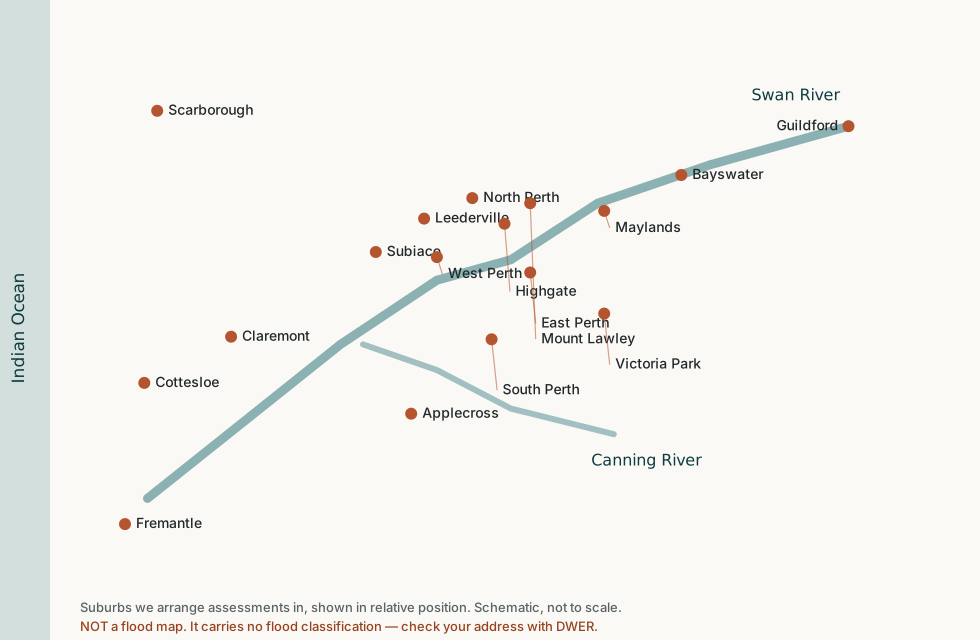
We arrange assessments across the Perth metropolitan area, including: